


A 4-Step Guide to Registering Your Business in Singapore
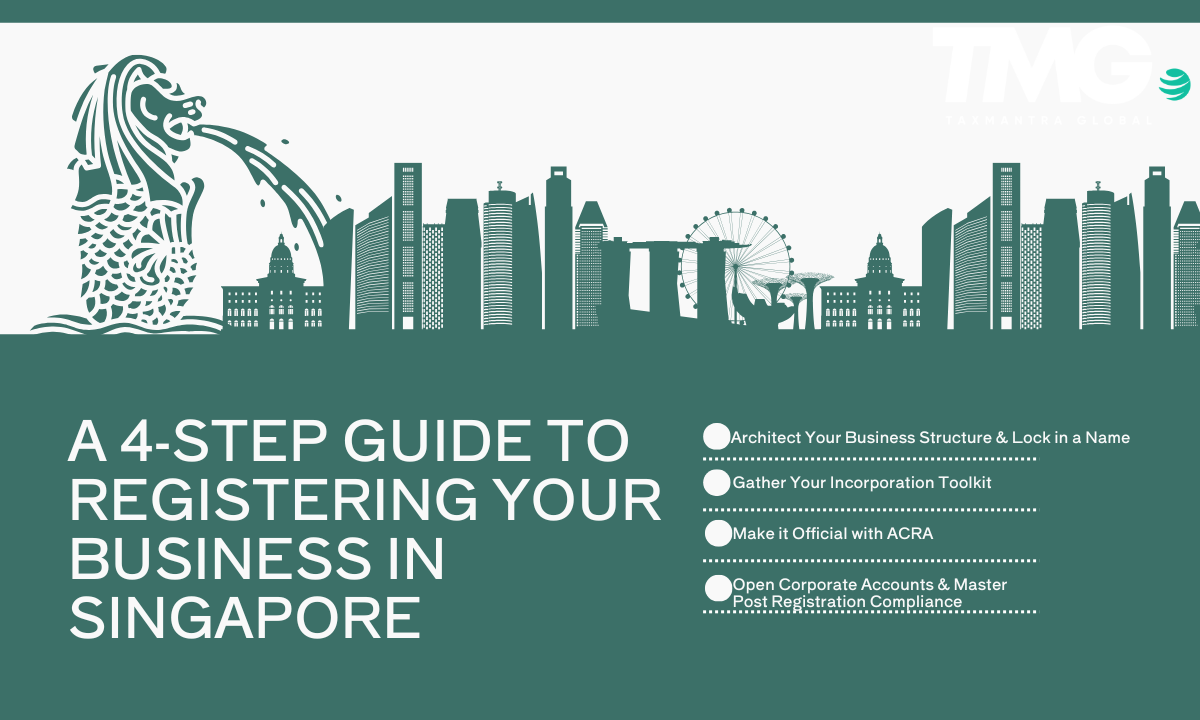
Imagine expanding your business to a place where the economy thrives, taxes are fair, and setting up a company doesn’t involve months of bureaucratic red tape. For thousands of ambitious entrepreneurs and scaling companies, that place is Singapore.
With its business-friendly ecosystem, strategic geographical location, and robust legal framework, Singapore has firmly established itself as the premier launchpad for global expansion. Yet, despite its stellar reputation, many business owners, particularly founders from India hesitate. The process can feel shrouded in international legal jargon and compliance confusion.
The truth? Setting up shop here is incredibly efficient if you know the terrain. Let’s demystify the process to register a business in Singapore into four straightforward, actionable steps.
Why Founders are Choosing Singapore
Before diving into the paperwork, it is worth looking at why so many startups, SMEs, tech outfits, and e-commerce brands are flocking to the Lion City.
Singapore doesn’t just welcome foreign investment, it actively champions it. When you pursue business registration in Singapore, you unlock:
- 100% Foreign Ownership: You retain complete control of your company without needing a local majority partner.
- Tax Efficiency: Enjoy highly competitive corporate tax rates and generous exemptions for new startups.
- World-Class Banking: Gain access to some of the safest, most technologically advanced financial institutions in the world.
- Global Credibility: Operating from Singapore instantly elevates your brand image in the eyes of international investors, partners, and customers.
Step 1: Architect Your Business Structure & Lock in a Name
Every great venture starts with a blueprint. The very first step in the process to register a business in Singapore is deciding how your company will be structured and what it will be called.
Choosing Your Vehicle
For the vast majority of foreign entrepreneurs, the Private Limited Company (Pvt Ltd) is the gold standard. It is a distinct legal entity, meaning your personal assets are completely protected (limited liability). Furthermore, a Pvt Ltd is highly scalable, enjoys excellent tax perks, and is the structure global venture capitalists prefer to fund.
Naming Your Company
Once your structure is set, you need a name that stands out. Singapore’s Accounting and Corporate Regulatory Authority (ACRA) oversees this process. To ensure a smooth approval, your proposed name must:
- Be entirely unique and not conflict with existing businesses.
- Avoid any restricted, sensitive, or protected words.
Step 2: Gather Your Incorporation Toolkit (Documentation)
With a name approved and a structure chosen, it’s time to gather your paperwork. Because Singapore takes corporate governance seriously, your documentation needs to be flawless to avoid unexpected delays.
For foreign founders, the standard checklist includes:
- A copy of your passport and official proof of residential address.
- A clear brief detailing your primary business activities.
- Your finalized shareholding pattern and allocation.
- Particulars of your appointed directors.
The Local Requirements
To anchor your business legally, Singapore requires a few local touchpoints:
- A Resident Director: At least one director must ordinarily reside in Singapore (a citizen, permanent resident, or EntrePass holder).
- A Registered Local Office Address: A physical, commercial address in Singapore (not a P.O. Box).
- A Company Secretary: A qualified local resident must be appointed within six months of incorporation.
The Reality Check: Incomplete paperwork is the number one reason registrations stall. If you are managing this expansion from India, partnering with a corporate service provider who bridges the gap between both countries’ compliance systems will save you weeks of frustration.
Step 3: Make it Official with ACRA
This is where your vision becomes a legal reality. Once your documents are meticulously prepared, the formal application is submitted to ACRA.
During this stage, the registry will:
- Process your formal incorporation application.
- Log the details of your shareholders and directors.
- Incorporate your company constitution (the rules governing how your business operates).
The Finish Line
Singapore’s digital infrastructure is incredibly efficient. If your documents are in perfect order, ACRA typically approves the incorporation within 1 to 3 working days. Upon successful registration, you will receive your Unique Entity Number (UEN), your company’s official ID, alongside your official Certificate of Incorporation.
While the speed of the Singaporean government is a breath of fresh air, do not mistake speed for simplicity. Securing the certificate is just the beginning; the real strategy lies in how you manage your ongoing corporate health.
Step 4: Open Corporate Accounts & Master Post Registration Compliance
Congratulations, your company exists! Now, it’s time to make it operational. Step four transitions you from a registered entity to an active, thriving international business.
Your immediate post incorporation checklist involves:
- Corporate Bank Account Opening: Setting up accounts with local or international banks to manage your global transactions.
- Licensing & Permits: Securing industry specific licenses (if you are entering sectors like fintech, food & beverage, or employment agencies).
- GST Registration: Registering for Goods and Services Tax if your taxable turnover exceeds the local threshold.
- Ongoing Governance: Setting up robust bookkeeping to handle annual filings and corporate tax returns.
The Window of Opportunity
The process to register a business in Singapore is remarkably streamlined, but it demands strategic foresight.
Many entrepreneurs miss out on international market shares because they get stuck in analysis, worrying about foreign compliance or timing the market perfectly. Meanwhile, agile competitors are already establishing their footholds, setting up tax efficient structures, and raising global capital.
Singapore isn’t just a dot on the map, it’s your gateway to global scale. If international growth is your ultimate goal, the best time to start planning your expansion is today.
Tags: Business Registration in Singapore, Business Registration Singapore, Business Setup in Singapore, Register Business in Singapore